Trondheim Greenhouse
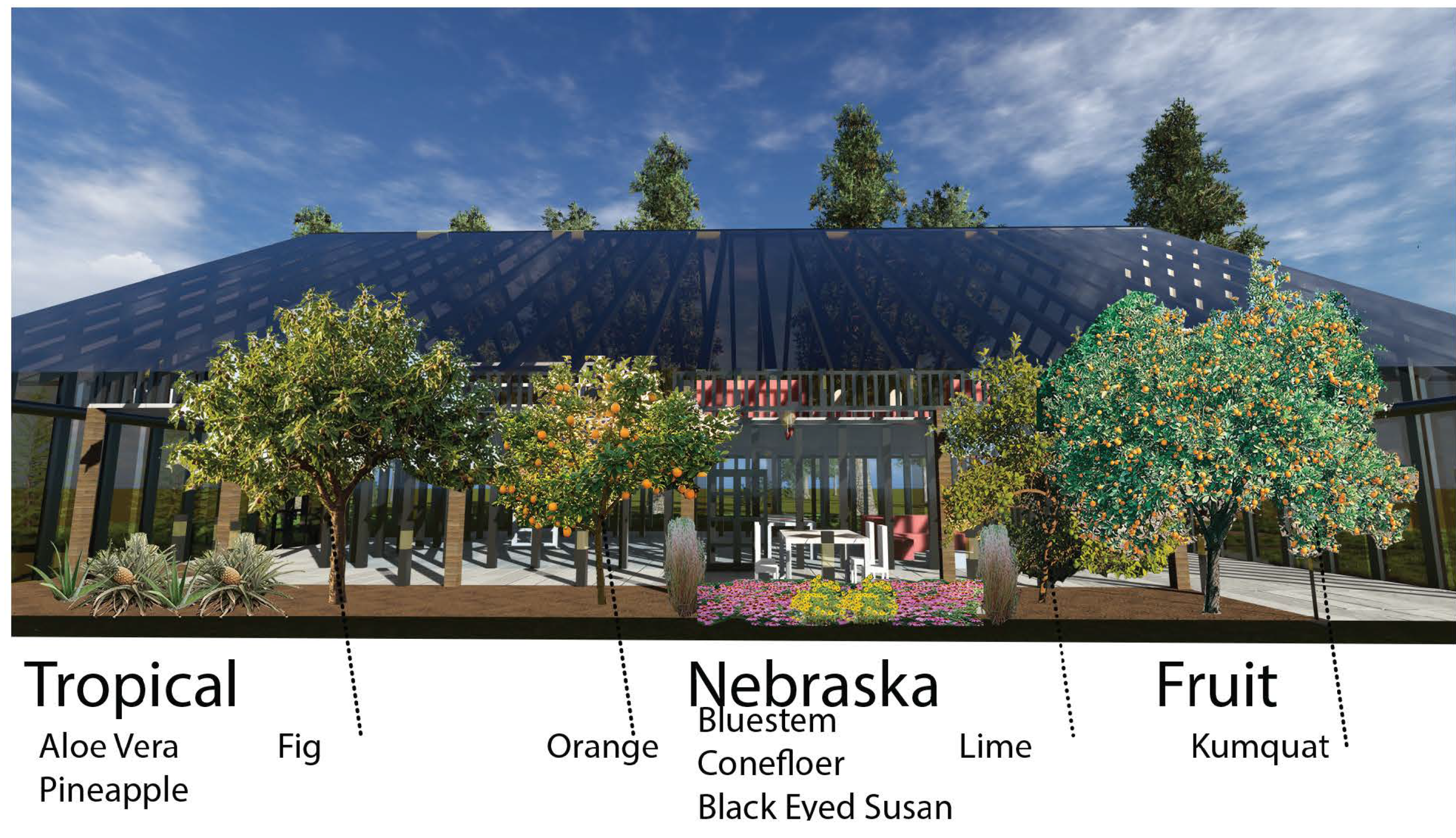
An ecological housing concept that reimagines living in cold climates through a greenhouse-enclosed dwelling that supports year-round habitation, food production, and connection to natural systems.
Portions of the greenhouse enclosure are removed in this view to reveal interior planting systems and spatial relationships.
Project Overview
Project Type
Ecological Housing Design
Project Name
Trondheim Greenhouse
Location
Trondheim, Norway
Design Process
Problem
In Trondheim, long winters, limited daylight, and sustained cold temperatures increase reliance on energy-intensive housing while limiting access to natural light, outdoor space, and year-round food production. These conditions create a disconnect between residents and the ecological systems that typically shape daily life.
Approach
Designed a self-sufficient greenhouse dwelling that integrates water collection, diverse food production, optimized light access, and spaces for leisure, creating a resilient living environment within a harsh climate.
Discovery & Site Understanding
Site exploration in Trondheim examined how extreme seasonal shifts influence habitation, resource use, and relationships to the surrounding environment. This process revealed opportunities to use climate as a design driver—transforming harsh northern conditions into an inhabitable interior landscape that supports long-term resilience and well-being.
Concept Development
Concept development focused on balancing separation and proximity between living and growing environments. The dwelling is thermally separated from the greenhouse to maintain comfortable interior conditions, while remaining directly connected to allow year-round access without exposure to harsh winter conditions.
Design Refinement
As the relationship between the living quarters and greenhouse was refined, the design focused on improving connections between systems while maintaining thermal separation. Interventions include transitional elements such as porches and balconies with integrated planting, as well as shared spaces—like a greenhouse living area—that blur the boundary between interior and cultivated environments. Outdoor features, including fire areas, extend usability and support year-round occupation.
Outcome & Intent
The project proposes an inhabitable greenhouse in Trondheim that functions as a controlled climatic envelope, enabling daily life within a moderated environment despite extreme seasonal conditions. It blurs the boundary between dwelling and landscape by integrating living spaces into a productive ecological system that supports thermal comfort, seasonal resilience, and a continuous connection to natural processes.
Final Design
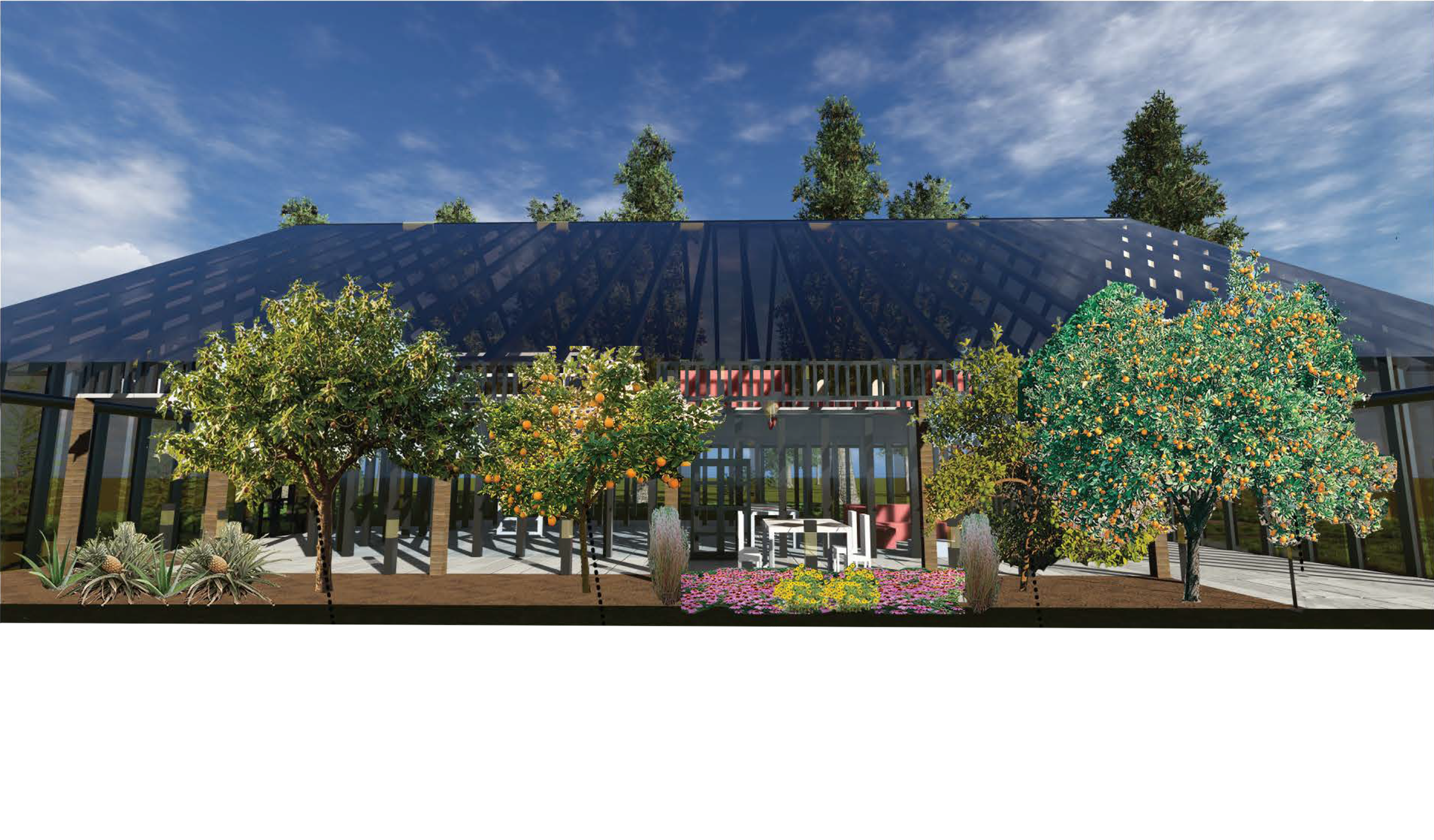
South Rendering. Greenhouse wall removed to reveal the planted landscape.
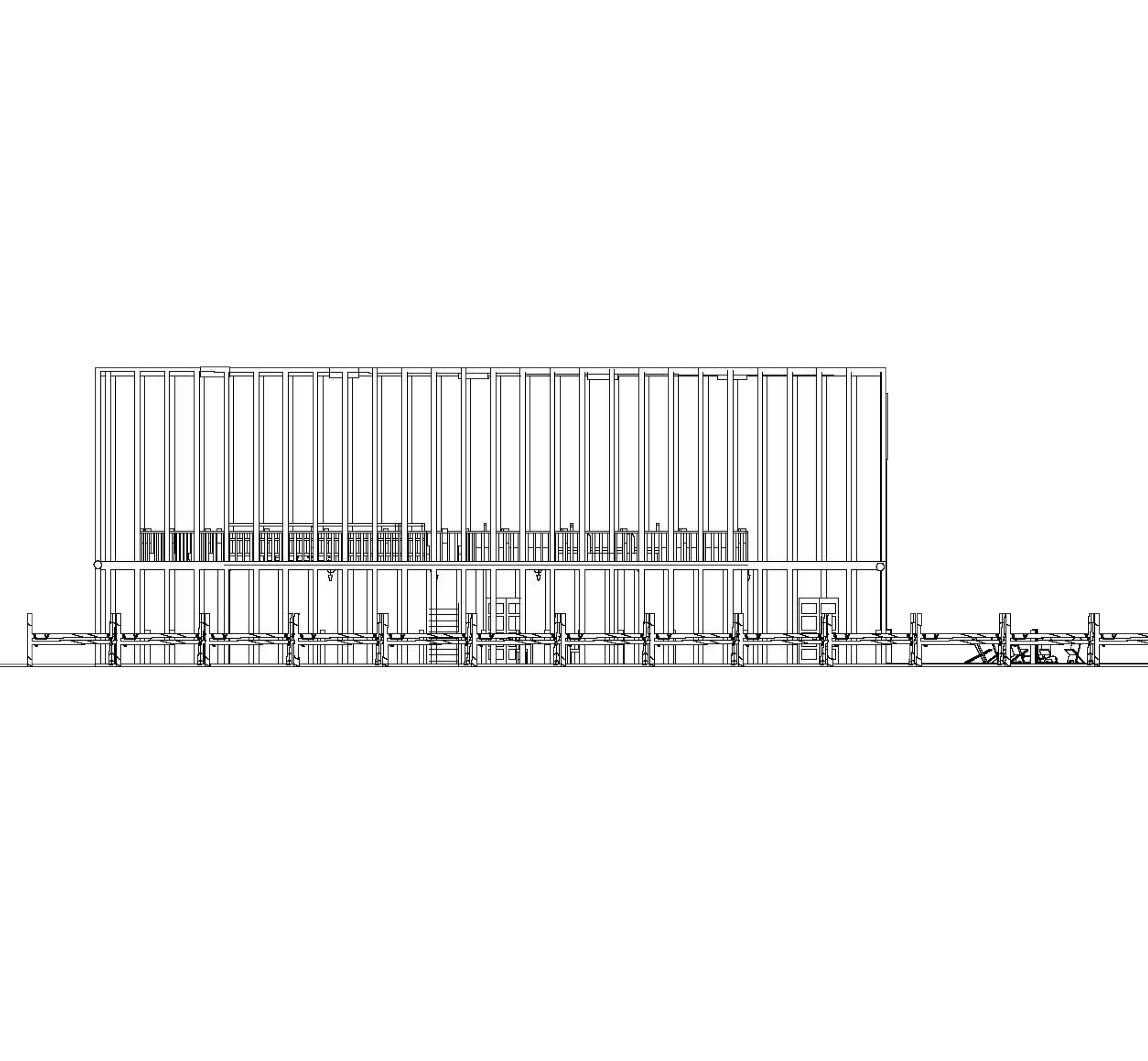
South Elevation
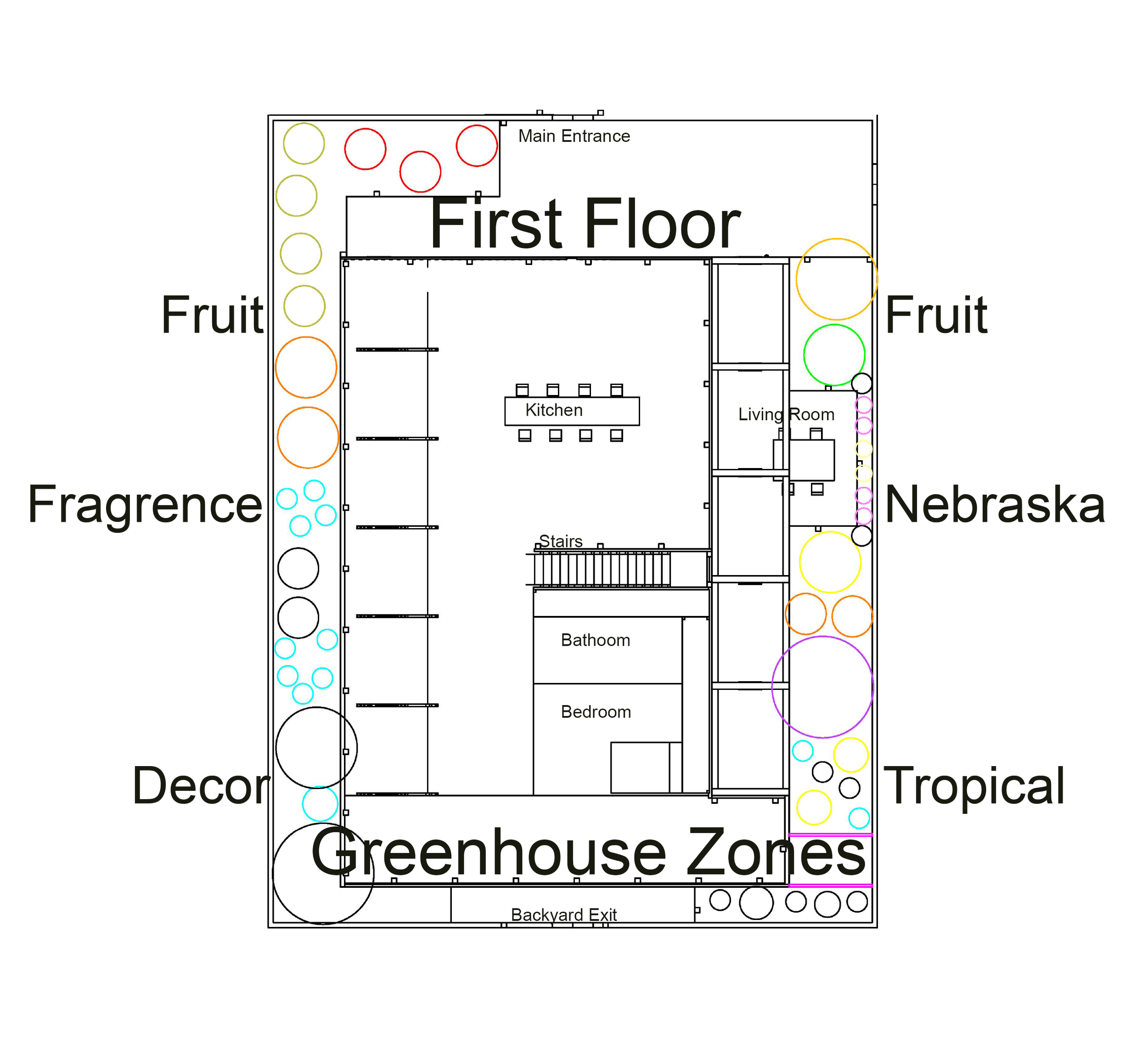
First Floor Site Plan
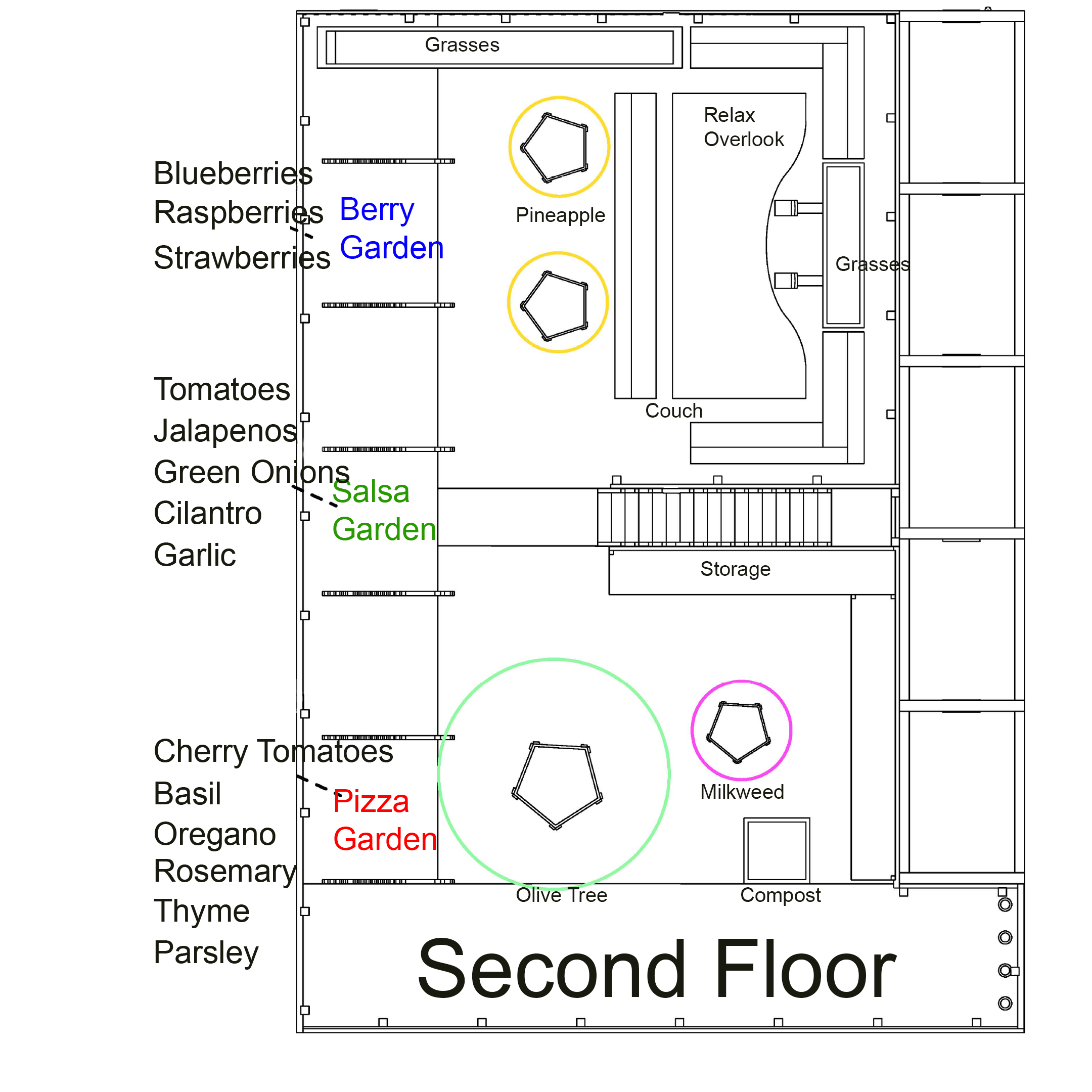
Second Floor Site Plan